Sunday, September 7, 2014

Hunt Report - Bear Opener

To the wilderness . . . 


Unsurprisingly, I woke up a bit late Saturday morning and didn't make it to the trailhead until an hour after first light. Nothing is more defeating to me than arriving late to a hunt, particularly a morning hunt for bear when the best time to be in the woods in the first two hours or so. The hike from the trailhead to Tunis pond takes me about 1 hour and 15 minutes to complete and I figured it would take another 30 minutes to setup once I got there. So in all, I was 2 hours and 45 minutes late. Not the best start to the bear season. To make matters worse, I was feeling the aches and pains that come with only getting four hours sleep. Feeling a bit defeated, I decided to make it a day hunt and quickly went through my pack  for things to leave at the truck. At the mile mark, I could tell my pack was way too heavy, particularly for a day hunt. The smart thing to do would have been to stash some of my items along the trail, but somehow that thought never entered my mind. 

By the time I got to Tunis Pond, I was ready to shed the pack. Having barely scouted Tunis on the last trip, I took the blown hunting opportunity to thoroughly scout the area. Shedding the pack, I began to scout around. I was hoping to find that smoking gun of fresh sign--steaming piles of scat, a well worn trail, a rubbing tree, etc--that would tell me inconclusively where to place my stand and give me great confidence going forward. There would be none of that. Aside from a few piles of old scat, I found next to nothing. There are some trails, but I'm unsure if they are being used by bear. I did set a trail camera on one of these trails, but it was mostly because I was tired of hauling the weight around and I don't expect to see much come next week when I pull the camera. 

With little if any sign, I decided to head further down the trail and follow the Beaverkill river once it splits from the trail. The hike from Tunis to the Big Indian Wilderness boundary (where the trail and river split) is spectacularly beautiful. I didn't find much sign along the Beaverkill, but I didn't go very far either. The habitat is intriguing. It feels bearish. As a last resort, I did one calling set, mimicking the sound of a distressed rabbit for the better part of forty minutes. I haven't practiced this type of calling before, and my inexperience was very noticeable, at least to the human ear. At one point, two bluejays joined in the chorus, which left me wondering why two bluejays were so interested in my call, and then I realized that the cadence of my calling sequence and the pitch of the call sound disturbingly close to the sound of an alarmed blue jay. Needless to say, I wasn't swarmed by bears. 


A few faint tracks in the sand did catch my attention.  At the time, I thought they were bobcat tracks, but after reviewing it further I believe it is indeed a bear track. If so, there are bear in the general area (this is the second set of track in the area), just not a lot of them and for any length of time. If I was hunting every day, I might be tempted to sit over a trail in hopes of catching one of these bears as the travel through the area, but I'm only hunting one or two days a week and I'm guessing the bears make a pass through the area about once a week. It's obvious to me then that the chances of me and the bear being at the exact same spot at the same time are quite slim. So I have hatched a new strategy, which is basically cover a much ground as possible, doing calling sets every half mile or so. So I have a week to improve my calling. We'll see. 


 The track that I think is a bear along the Beaverkill River.

Another view of the track that I think is a bear track.


Marshy area along the Beaverkill River where I made my calling set.


Just inside the marshy area where I made my calling set.


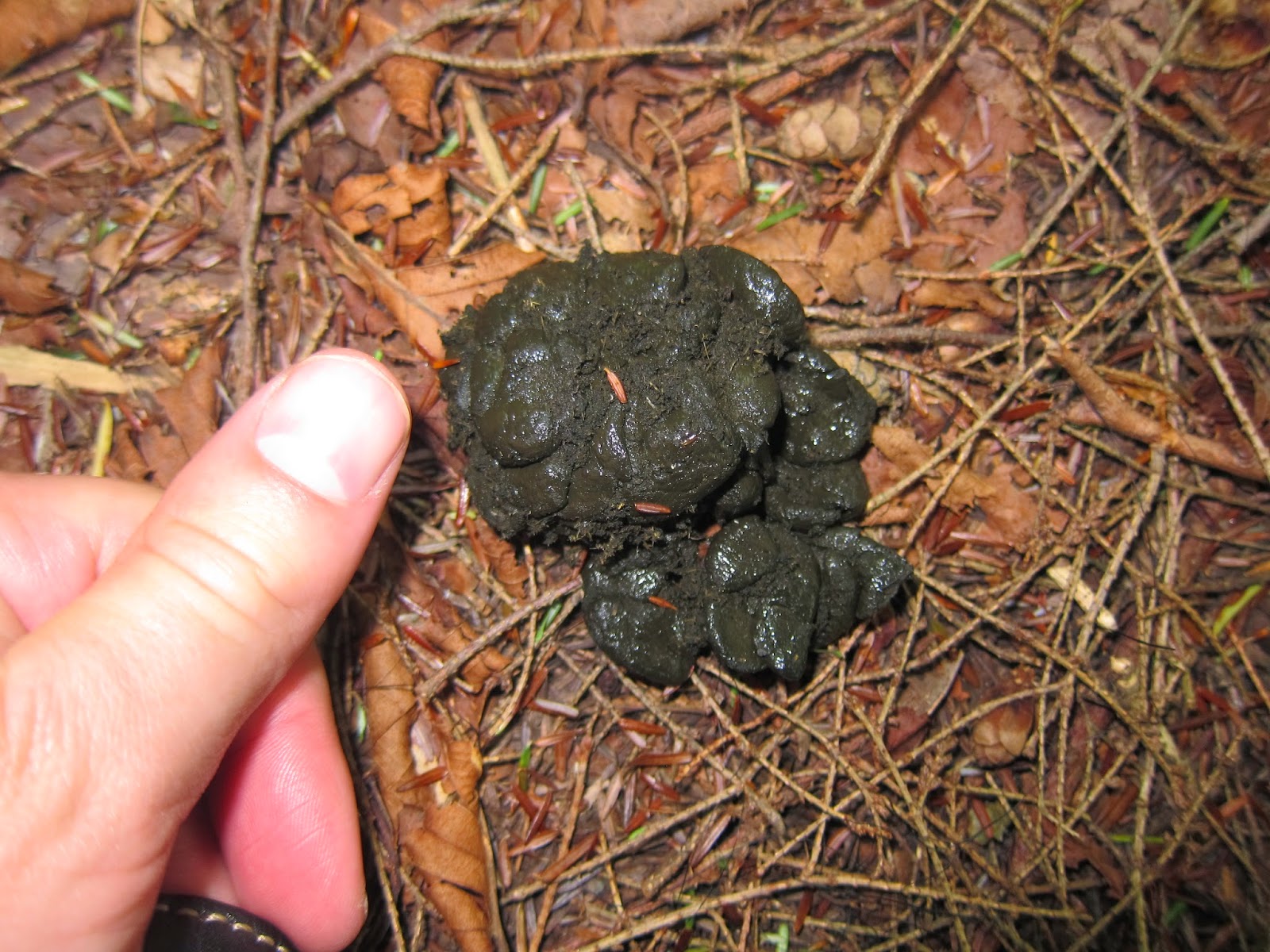
What's a blog post without pics of scat? I read that when you come across scat from a big bear that it is unmistakable. I think this qualifies.


Friday, September 5, 2014

Camping Supplies List

So the bear opener is in about 6 hours away, and I've just finished packing. For the record, I started packing yesterday, but we recently moved and everything now seems to be in hiding from me. Here's my list, which can be seen above as well:


GEAR

  • Matches
  • 3-4 small pieces of pitchwood (I'll demonstrate later)
  • Esbid Stove
  • 3-4 esbid fire pellets
  • 2 cup cooking pot
  • Water pills (in case it comes to that)
  • 50' of small diameter parachute cord
  • Map
  • Compass
  • GPS
  • Aspirin/Pain Killers
  • Felco Saw (to procure wood. Trust me, can't beat it)
  • Headlamp
  • Flagging tape (to mark the blood trail and my own trail if I get lost)
HUNTING EQUIPMENT
  • 12 gauge (easily the heaviest item in the pack)
  • 6 sabot slugs
  • Pocket Knife
  • Fillet Knife (The most useful and multi-purpose knife I have ever owned)
  • Trail Camera
  • 5 Game Bags
  • Bag of Pepper (to keep the flies off the meat while quartering it)
  • Predator calls
  • Hunting License
FOOD:
  • Sweet & sour pork freeze dried meal
  • Omelet freeze dried meal
  • 4 packages of instant oatmeal
  • Chunk of trail sausage
  • 2 peaches
  • 1 powerbar
  • About a pound of trail mix 
  • Lots of water
CLOTHING
  • Cotton camo pants
  • 2 pairs of wool socks
  • 2 pairs of silk liner socks
  • Camo rain/all-purpose jacket
  • Blaze orange vest
  • Fleece
  • Wool flannel (I take it everywhere, no matter what the temperature)
  • Hiking boots
  • Camo facemask
  • 1 stocking cap
  • 1 baseball cap
  • 1 boonie hat
  • 2 wool/silk liner shirts
  • 1 tee shirt

MISSING ITEMS
  • Tent (not a big fan of them unless it's cold)
  • Sleeping bag (too warm for a bag)
  • Scalpel & blades (welp)
  • Spandex knee crops (welp. I wear them almost everywhere)
  • Dried fruit (tough find)
  • Bagels (easy find. I just forgot)
  • Belt (welp. must find)
  • First aid kit (must get one)
I'm only staying over one night, but I'm still a bit amazed how much weight is on the pack. No big deal for hiking, but I don't want to hunt with it all day. That means I must either make a base camp and leave all my stuff there or leave it all at the truck and just hike back at dark, perhaps even head home. At this point, I leaning towards the latter. 


The pack fully loaded. I bought that pack for 5 bucks at the thrift store. Best backpack I have ever owned. And I have owned some rather expensive packs.


My freezer. I made a bunch of ice to leave in some coolers in the back of my truck. You know, in case I'm a lucky guy. Also, note the freezer is empty otherwise. I hate an empty freezer. 

Wednesday, September 3, 2014

Scouting Report - Balsam Lake Mountain Wild Forest

As promised, here goes nothing . . . . 


Headed up to the Balsam Lake Mountain Wild Forest the other day to scout for bear.
This was my third trip to the area. My  first trip, which I partly document here, was less than productive, though we did find some bear sign . For this trip, I relocated about three miles northeast to Balsam Lake Mountain Wild Forest trailhead at the end of Beaverkill Road (google maps shows it turning into Turnwood Road). I had found a couple small lakes on the map about two miles from the trailhead just off the Finger Lakes Trail. These turned out to be Vly Pond and Tunis Pond. I'm just a rookie when it comes to bear hunting, but my understanding is that bears love water and the often rich food sources its fringes hold. In this case, the open area in the forest canopy has to be good for forage. At the very least, I figured it was worth a shot. That's really all a person can do:  identify areas from a map that look intriguing and then groundtruth those suspicions by putting boot to trail.

As I mentioned before, two miles probably eliminates just about 95% of hunters. So if Tunis held bear, I figured it was the perfect scenario:  some type of habitat attraction or wildlife corridor that is just outside most hunters' range but well within my own. That it is easily accessed via hiking trails is a bonus. I didn't time my hike but I would guess it took me less than an hour to hike from Tunis to the trailhead (i was scouting on the way in). It's not the most physically exerting trail, but it does have its elevation gains that do get the heart rate moving at a decent clip (this is doesn't require much; I'm not in great shape these days). The forest is typical for the area:  maples, birches, and hemlocks with a few beech trees in the mix as well. 

Just before Vly Pond the trail crosses a dirt road. This was a surprise to me and my first reaction was utter despair. There were recent tire tracks on the road, and I figured someone had grandfathered rights to the road. Worst case scenario being that that someone is a hunting club. I still don't know, but my fingers are crossed. About a 1/2 mile after Vly Pond the trail intersects another road that the trail terminates into. The signs at the intersection give distances to the nearest locations, but do not provide directional arrows. I was unsure if I needed to turn left or right to stay on the trail. I had read that ownership rights along the Beaverkill River can be a bit confounding, and I didn't want to trespass on private property and have to deal with that headache. Luckily, I had preprogrammed coordinates into my GPS for Tunis Pond before heading out. A quick check of the GPS revealed that left led to Tunis. Still, the trail is essentially an old road, and I couldn't shake the feeling that I was on private property and should have instead made a right. 

Tunis is another .25 mile or so after the turn (left). It's a beauty of a lake, and I found a fair amount of bear sign in the area, including a very fresh track. Most of the sign was on the backside of the lake along a well established trail, though I believe the trail is more the domain of deer than bear. The boggy area surrounding the lake holds some kind of small blackberries (blush, I don't know the name and I didn't take a picture). The hillside surrounding the lake is choked full of hazelnuts, with a few beech trees in the mix. In other words, it's got food aplenty. I got that tingly feeling I often get when I have found a prime location. At one point in my life, I would suppress that feeling and write it off as wishy-washy humdrum. Then I would unexpectedly spook an animal from the area and kick myself for not paying more attention to my gut feeling. I no longer ignore that gut feeling, and so, I will be hunting around Tunis Pond this Saturday for the opening day of bear season. I don't expect to get anything or, for that matter, even see anything. However, as the adage goes: you don't get anything sitting on the couch. 

Being a rookie and all, I don't put much confidence into my bear sign interpretation skills. Below are some pics of sign I found. They are organized by how confident I feel in them being bear sign. 

Sign I feel sure about:


Yep. Bear track.


Ditto


  At least a couple months old. Interestingly, I think those are acorn shells. Yet I didn't see any oak trees in the area. If those are acorns, then I'm guessing the scat is from the fall. It was solid.


Ditto

Less sure about:


Doesn't get any fresher, but is it bear scat? The picture is deceiving. The scat is actually much larger, it just sank into the bog upon impact. 


Fresh, small, and globbish. Deer or Bear? 


Fresh and biggish, but not huge. Still, I think it's bear scat. I've never seen deer scat like that. Why am I doubting myself?


Path of travel. Do you see swerving type gant of the animal. It's not as noticeable  in the picture, but it doesn't have straight and linear pattern of a deer.

Gots Me?


Pretty large throw area, but I suppose just about any critter can throw dirt. 


Bear scratching? Or rotting tree?


Deer scat, right?


Scratching post? Or just some worn bark? I should have looked for hair.

That's it. Thanks for reading!

Tuesday, September 2, 2014

Revealing the Locations of My Hunting Spots

I've decided to identify the areas I hunt. It just makes for a more interesting and informative read. Most of the areas I hunt are roadless and require a good amount of hiking to access, so even if this blog gains a million readers (as of this posting, it would need another 999,998 or so readers to reach that milestone), I doubt there will be an onslaught of hunters invading my spots. And to be honest, I wouldn't mind seeing a few more hunters on the trails. Perhaps that will happen come archery season, but I have a feeling I'll be mostly alone. 

Wilderness hunting requires a special kind of knowledge, skill, and conditioning that most hunters don't possess or know how to attain. Revealing the areas I hunt allows me to show my process from start to finish.  Hopefully that will help others jump into wilderness hunting, particularly my East Coast Brethern who seem particularly fearful of hunting the deep backwoods. My process starts with identifying large wilderness areas to hunt and slowly honing in on specific locations within those areas. It's difficult to show that process without actually revealing the area I intend to hunt. I suppose if my spots get invaded, I'll just hop to the next wilderness.

As of yet, I'm unsure just how specific I'll get with spot revealing. You definitely won't be getting the GPS coordinates to that lone apple tree tucked two miles into backwoods that is attracting every critter in a three mile radius. But I might reveal the general area, trailheads and trail, drainages, etc. If you want to cut corners, I suppose you could just hunt the areas I detail in my reports, but I think you will be doing yourself a huge disservice. Half the fun is locating your own area and completing the process from start to finish. There are literally hundreds of wilderness options in the Catskills. Some may be better than others, but I'm guessing they are all about the same in regards to wildlife populations. In other words, you won't gain much of an advantage by shortcutting the process. At the end of the day, you are still hiking two miles into the backwoods to hunt sparsely populated wildlife.

So here it goes, I'm gonna do what no hunter in their right mind would do--I'm gonna reveal my hunting spots from here on out. See you on the trail!

Saturday, August 30, 2014

I Hereby Enter the 21st Century

Trail cameras aren't my only technological addition this year. I'm also using a GPS unit for the first time as well. I have been contemplating buying one for the past five or so years. Although I had become comfortable using a map and compass for basic back country navigation, I was tired of wasting time getting lost and not knowing precisely where I was on the map. I could always find my way out and roughly locate my whereabouts on a map, but knowing what side of the mountain you're on doesn't help when it comes to relocating specific locations. Many times I couldn't find hunting and foraging spots I had found on previous scouting trips, such as a hot scrape or a nice bed of wild mushrooms. Oftentimes I found myself worrying that I had crossed a park boundary line and was trespassing, forcing me to turn back when in fact I was nowhere near the boundary line. In short, not having a GPS was costing me time, something I don't have a lot of these days, and also diminishing the experience.

Still, my disdain for technology (and my overall stubborn nature) kept me from purchasing one. I reasoned that it was a slippery slope, and questioned spending the money on an item I could ultimately do without when my hunting closet was clearly in need of more essential, big-ticket items.  Luckily for me, I have an amazing wife, who must actually listen to all that hunting drivel I spout, for when my mom inquired what I might want for Christmas, my wife recommended a GPS unit. And luckily for me, my mom and step-father obliged. 

It was the perfect gift: something I wouldn't purchase myself but would clearly use. However, my excitement quickly faded to disappointment when I realized the unit didn't display aerial Google Earth views or topography. Without one of those two features, it was impossible for me to determine where I was on the ground based on what I was viewing on the screen, which was simply a blue triangle surrounded by a featureless sea of gray (see stock photo below for what this resembles). I could mark way points to get me back to specific locations, but I still would have no way of determining where those waypoints were on my paper map. This meant I had no way of determining larger patterns as they related to topography and vegetation. Essentially, it was useless. After that first trial run, I placed it back in the box with the intention of never opening it again. There it sat for the better part of eight months. Then I went scouting in the Catskills, and got so freakin lost that the trip was nearly useless.  


I was expecting a Catskill Wilderness Area to resemble a Washington Wilderness Area: big trees and very little underbrush. Much to my surprise, nothing could be further from the truth. The understory in the Catskills is quite dense, making visibility difficult, especially with the leaves still on the trees.This made navigation difficult. Everything blurred together. I couldn't see the ridgeline I was aiming for, or, for that matter, anything distinguishable. I had planned on jumping off the hiking trail at the two mile mark and walking a ridgeline that somewhat connected to the trail through a saddle. However, the saddle was indistinguishable and I never found the ridgeline. Because my entire scouting plan was contingent on finding the ridgeline, the trip quickly deteriorated. 

To make matters worst, I had my new hunting partner in tow. With my ineptness on full display, we wandered aimlessly for nearly seven hours, up and and down hillsides until I finally gave up and called it a day. I had assured my new hunting partner, who seems to have very little backcountry experience, that we would be fine with map and compass. With each passing moment of futility, I felt his confidence start to slip and I began to wonder if he would ever return to the woods with me again. I'm still not quite sure, and it's been three weeks.

He had brought his GPS unit along. It was the exact same model as mine, and it suffered from the same deficiencies. However, he used it to mark a number of waypoints along the way, including the location of the camera we set. Later that week, I plugged those coordinates into Google Earth to reveal the path we took. It was a disappointment to say the least. I had wanted to scout an area roughly 3 miles by 3 miles. Instead, we walked about a 0.5 mile off trail before circling back to the trail. After seven hours, we had seen only a small sliver of the area. It was clear to both of us that we needed to upgrade to a better GPS unit, one that is capable of displaying topo maps.
  
Two weeks later, I needed to pull the camera. Still lacking a better GPS unit, I plugged some predetermined coordinates that I had pulled from Google Earth into my GPS, as well as the coordinates to the camera. I also decided to jump off the trail at a much earlier spot and follow a river for about two miles before climbing the mountain and then, hopefully, taking the ridgeline to the camera. It was a strategy that worked. The new approach and the aid of the GPS coordinates gave me a better sense of where I was at on the map. For the most part, I left the GPS off, turning it on only to check my location in relation to my predetermined coordinates. Mostly, I realized that my sense of distance was severely distorted. At one point I thought I had walked the two miles along the river to the point I was supposed to start heading up the mountain. When I checked the GPS unit, it revealed I had only gone 0.5 miles. So on I hiked. 

The system worked so well that I was beginning to think I wouldn't need to upgrade to a unit that displays topo. Then I tried to find the camera using the GPS, and I quickly realized why the topo is important. Although it led me to the camera, it did so without regards to topography. At one point, it showed I was just 200ft from the camera. When I looked in the direction the unit was pointing me, there was nothing but a near vertical rock ledge. Without the topo I was unable to plan an efficient route to the camera. And I paid dearly for it, dropping down and then having to climb back up multiple times. I did find the camera though, and the trip was enough of a success to convince me of the need to use a GPS unit. It will play a supplementary role to my map and compass, but I think the addition is necessary. 

As it turns out, the Garmin Etrex 20 does handle topo (see the pic). You just have to purchase the maps from Garmin for about $100 bucks. Or download the free ones which don't seem to have the quality of the Garmin maps. I will likely do one or the other here soon. In the meantime, I'll be poring over my paper maps, searching for that next great area to scout. And when I do find it, I'll have the added confidence that I'll be able to locate it on foot with the aid of my GPS unit. I might even manage to restore some of my hunting partner's faith in me. 


Wednesday, August 27, 2014

Is This Bear Shit?

I need a book on scat identification. Seriously, I see way too much scat that I am unable to identify. This looks like bear scat due to the berries and the leafs and the overall size, but I couldn't find any tracks or other signs of bear in the immediate vicinity, which leaves me with much doubt and little confidence. Not a good thing when it comes to hunting.


Tuesday, August 26, 2014

A Camera in the Garden


I'm not much for technology, particularly while hunting. I shoot a longbow. My backpack is a cheap aluminum external from the 70's that I bought at the thrift store for five bucks. Most of my hunting clothing consists of basic wool garbs that were also acquired at the thrift store. I use a map and compass. I light my fires with pitch wood. On warm days, I don't even carry a tent with me.  Etc. Etc. Etc. You get the picture. I keep it simple. So when my new hunting partner suggested we set out cameras, I cringed. 

I’ve never understood hunters’ infatuation with cameras, and I couldn’t understand why my friend would want to pack a camera two miles into the woods just to get some photos. However, after a brief conversation with friend, whose negotiating skills far outstrip my own (he started with wanting to bait the bears to the camera with jelly donuts and then settled for just placing the cameras without bait), I reluctantly agreed to place the cameras. Still, my doubts lingered. What purpose would they serve? If you can interpret sign, is there really a need for a camera? Doesn’t the camera just confirm what you have already discerned from scouting? Will the cameras spook the wildlife and make them weary of entering the area again? Is it really worth the effort? Am I joining the hordes of hunters (whom are likely far more successful than me) who rely too heavily on technology?

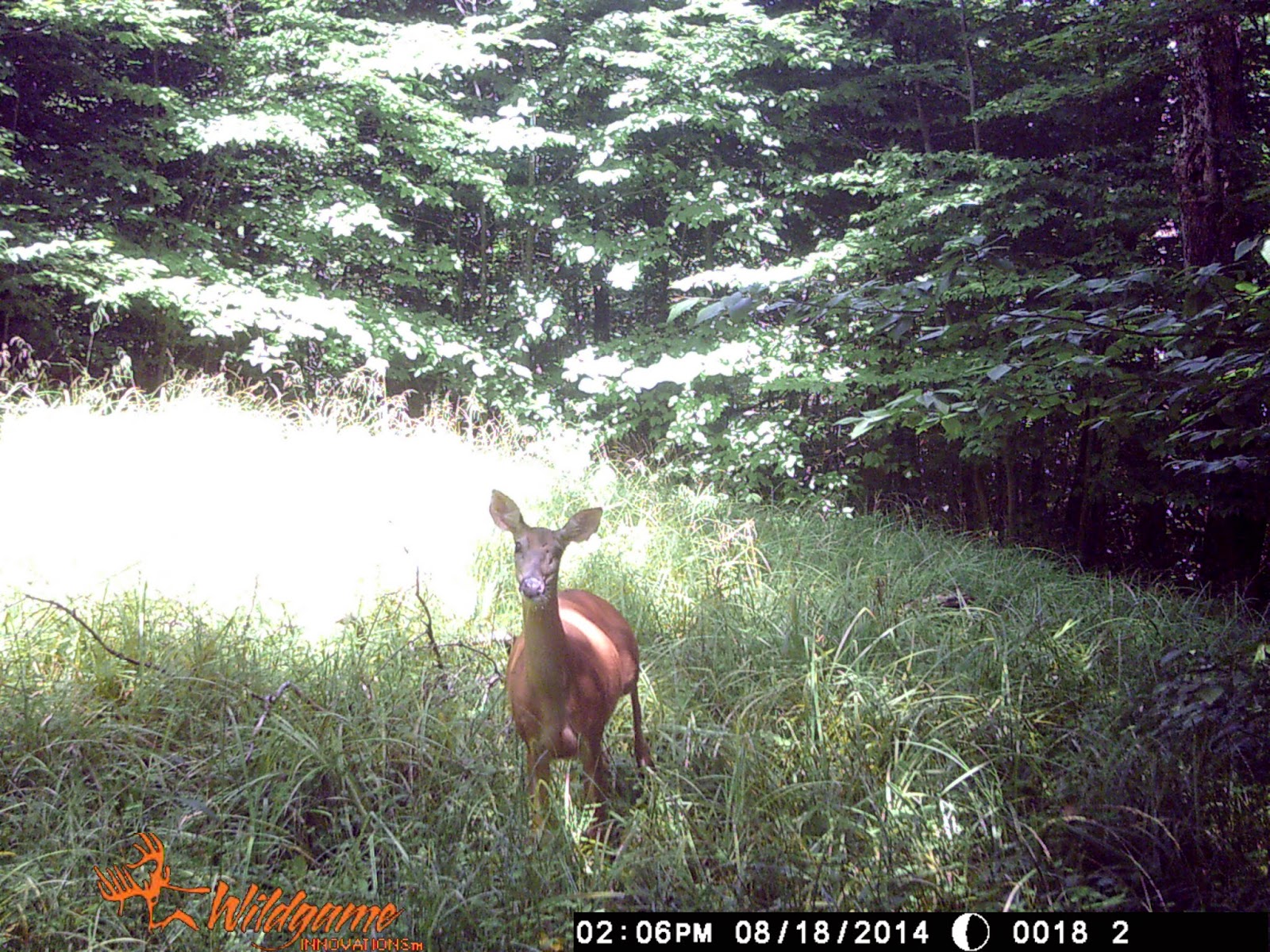
That was two weeks ago. We placed only one camera, and I pulled it this past Sunday.  I’m still a little split on the whole camera thing. The aforementioned doubts still linger in my head. But   must say, boy was it fun! For two weeks, I eagerly awaited the results. My  doubts quickly turned from Is it really worth the effort? to I wonder if we’ll get a picture of a bear or a nice buck. It was exciting, more exciting than just regular scouting. It also accomplished a couple of things that I can’t discern from scouting. First, it told us how often and at what times the deer and bear were frequenting the area (the former about twice a week around 2 o’clock; the latter never). Secondly, it showed how many deer and their size. In this case, a nice sized doe with a fawn.


I know. I know. Much of this can be discerned from reading the sign. And yes, I could tell it was a doe and her fawn from the tracks. And if I was good enough, I could have reached some reasonable estimate on how frequently they were visiting the area. I’m not to that level yet, and even if I was, it would still be good fun to set the cameras. 

However, there is one thing that makes me very uncomfortable: a couple pictures show the doe looking alarmingly at the camera. I’ve always felt that maintaining an element of surprise is biggest advantage a hunter has over big game. These deer are nearly three miles in a wilderness area. It is rarely hiked and probably never hunted. Essentially, they are unpressured deer. That’s a huge advantage for us, and I fear we may have lost it. There’s likely enough time before the start of the season (Oct. 1st) for things to calm down and return to normal. But I have an uneasy feeling that won’t go away. The kind you get when you see the tail end of a deer you just spooked. I'm also eager to set another camera.